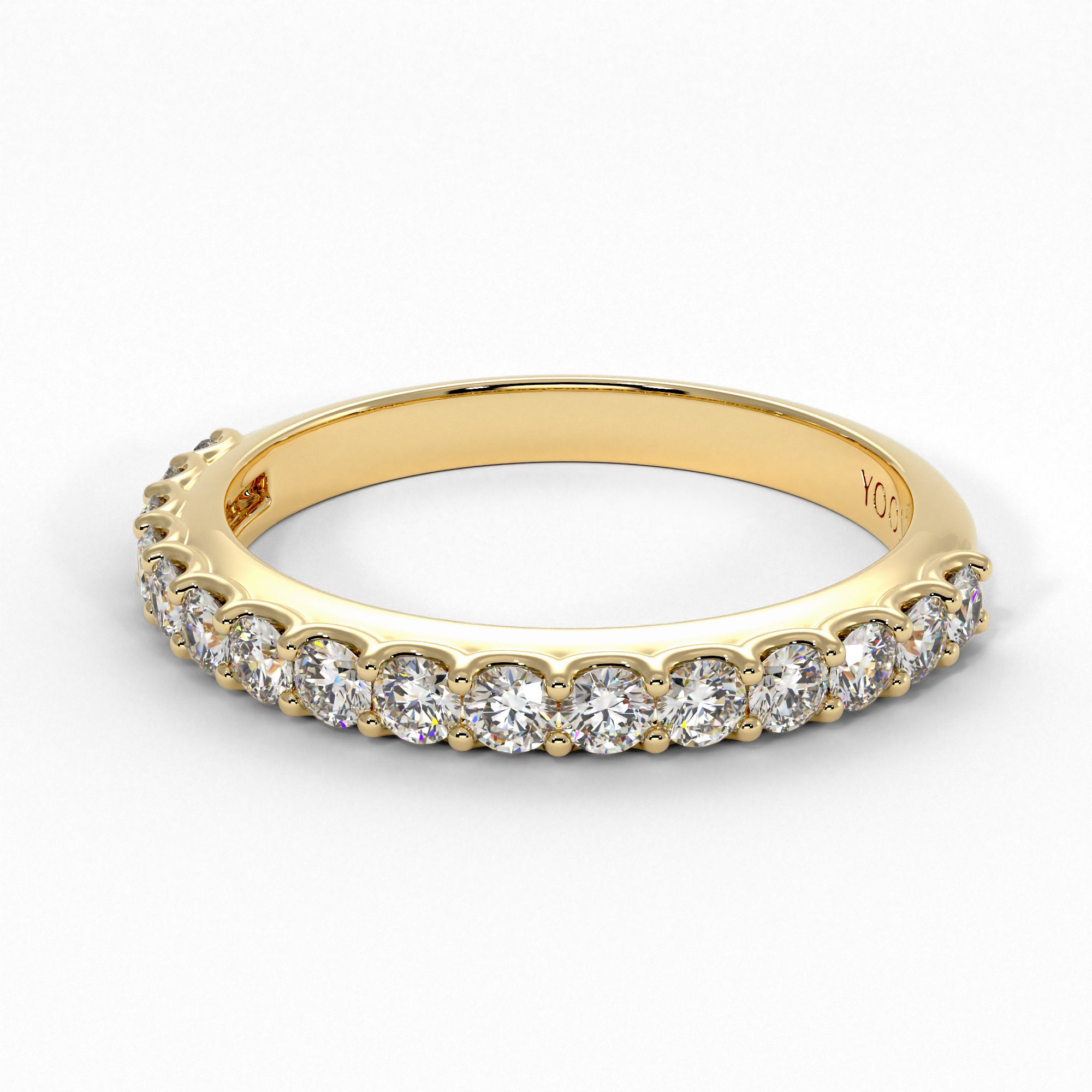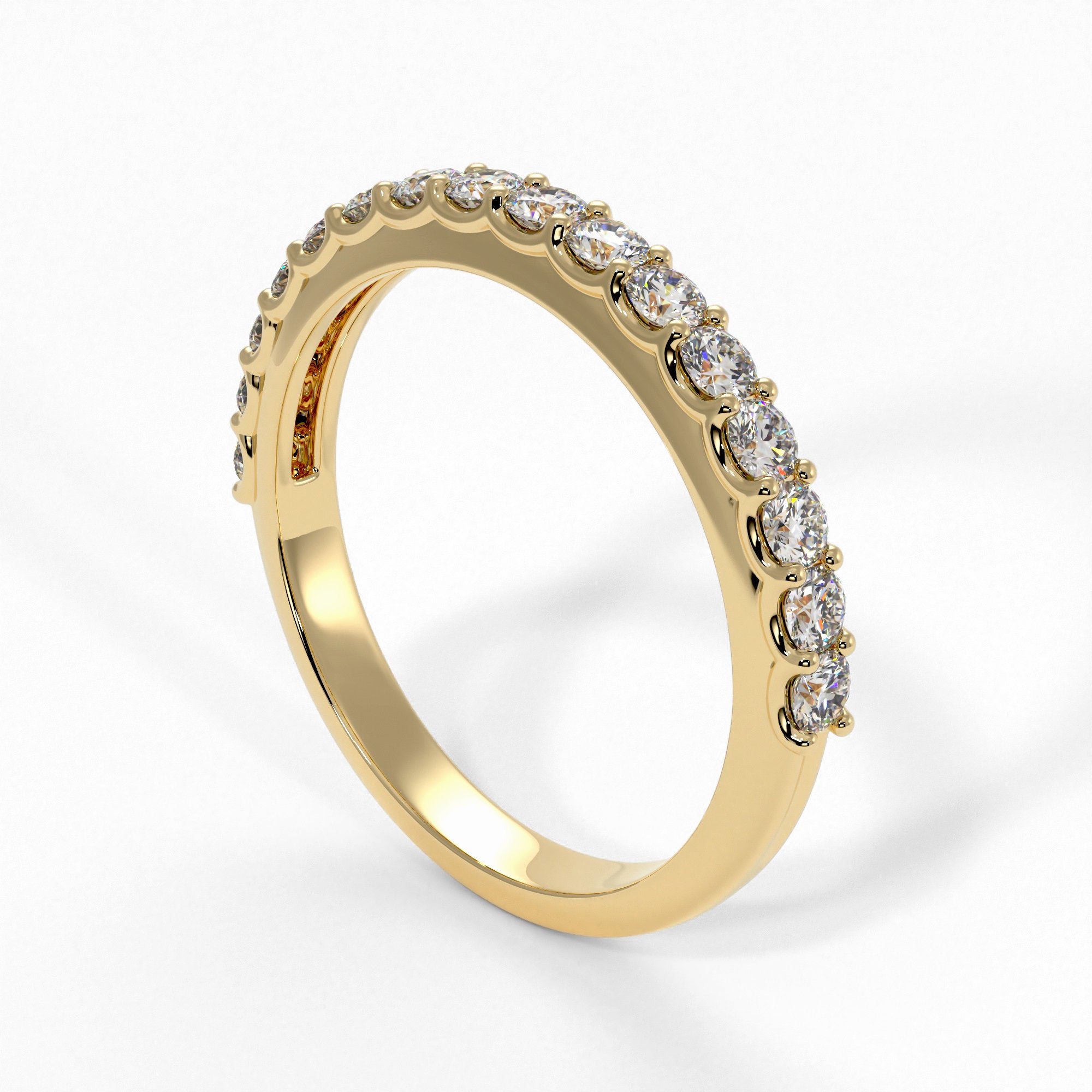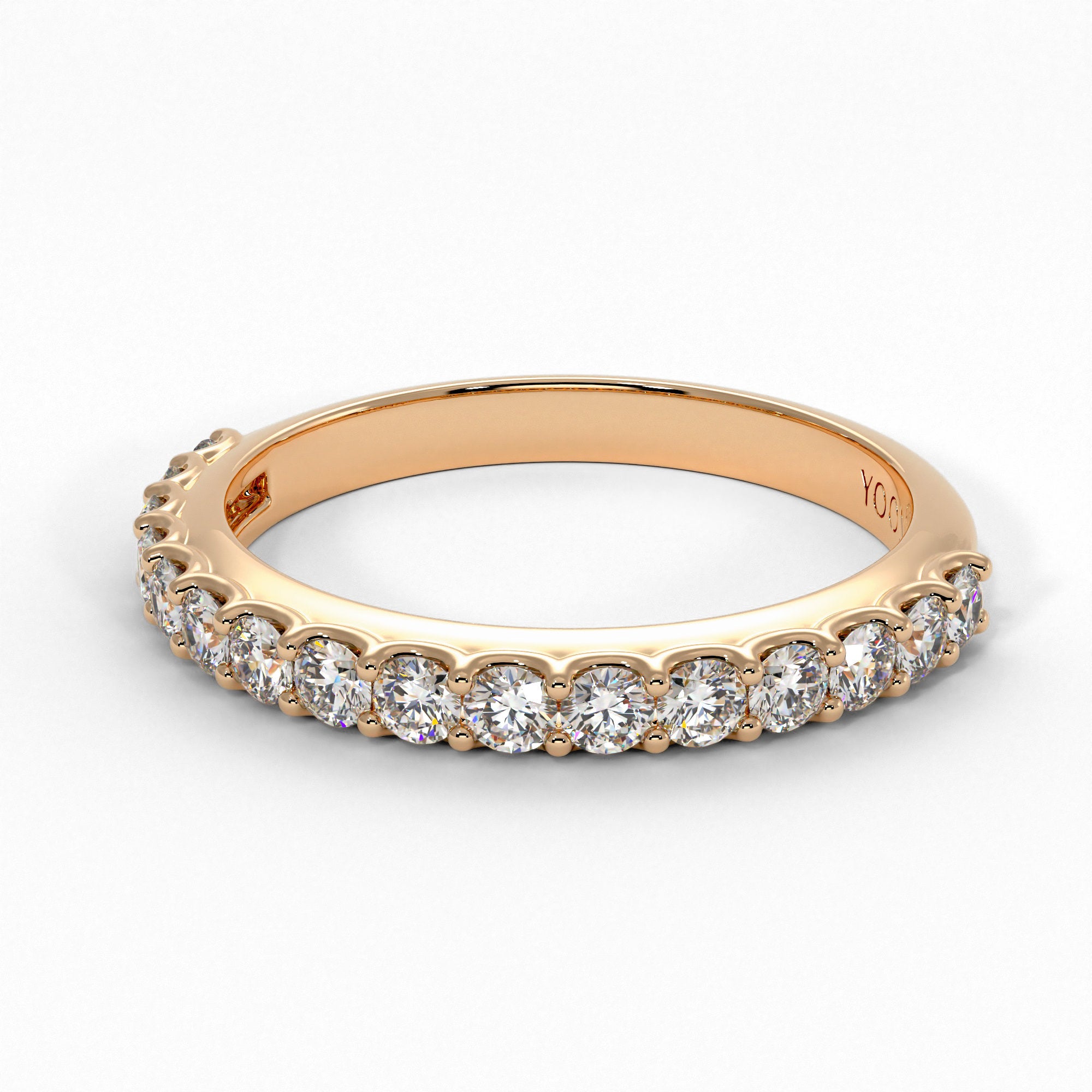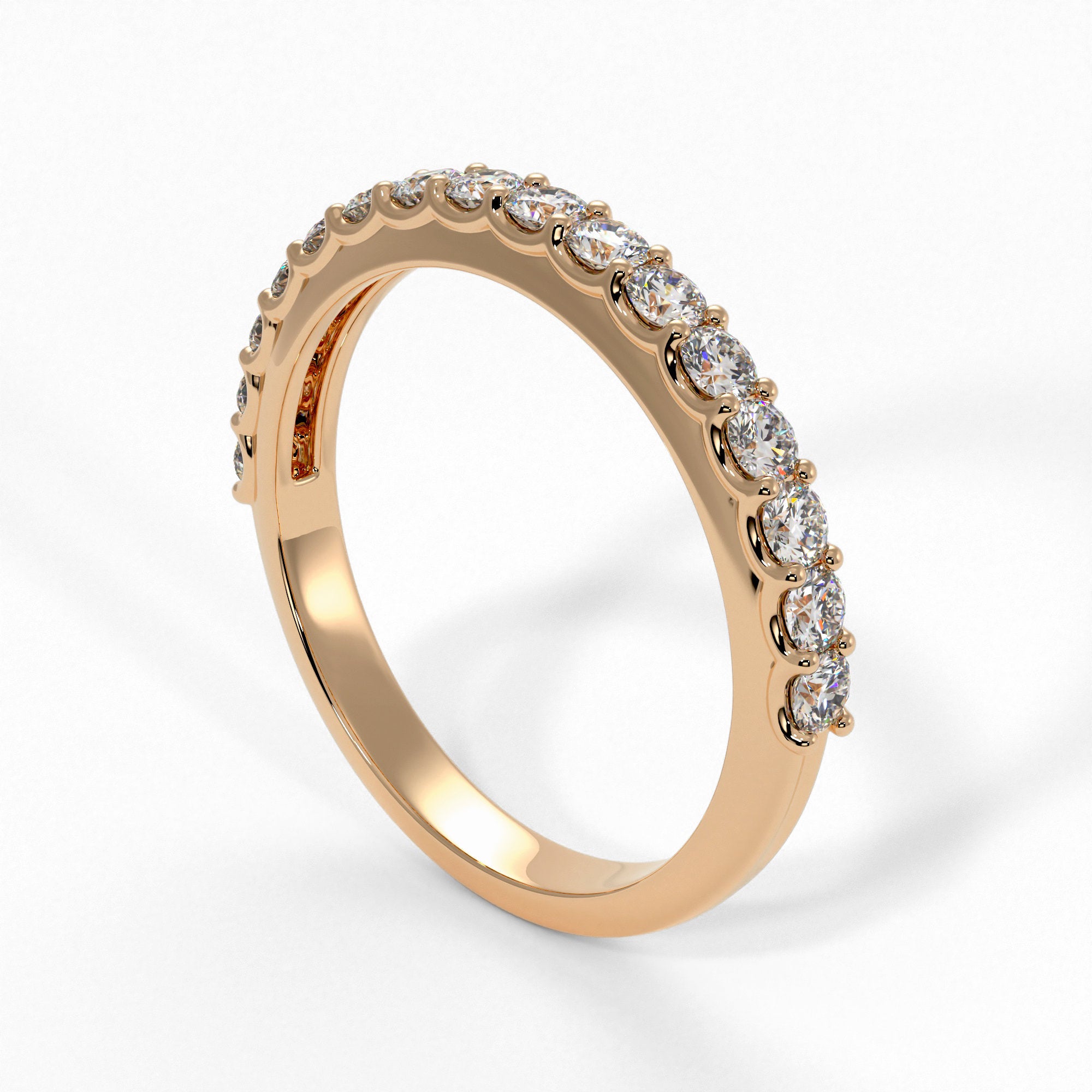






Reviewed by Yoona's in-house jewelry experts
Short answer: on land use, waste, and ecosystem impact, lab-grown diamonds have a categorical, structural advantage over mined diamonds, not a percentage, a guarantee. On carbon footprint specifically, the honest answer is that it depends heavily on energy source and is genuinely disputed in industry research. Here's what's guaranteed, and what isn't.
The Part That's Actually Guaranteed: Zero Land Disruption
Quick answer: Every lab-grown diamond, regardless of which facility grew it or what powers that facility, involves zero land extraction, zero habitat destruction, and zero open-pit or alluvial mining. This isn't an estimate, it's true by definition of how the diamond was made.
This is the strongest sustainability claim in the entire lab-grown category, and it's the one that doesn't depend on which study you trust. Mining a diamond requires moving substantial volumes of earth to extract a single carat, and that disruption happens regardless of how efficiently or responsibly a given mine operates. A lab-grown diamond skips that step structurally. There's no version of lab-grown diamond production that involves digging up land, because there's nothing to dig up.
Tailings and Waste Storage Risk
Quick answer: Diamond mining produces significant waste rock and tailings that must be stored somewhere, often in tailings dams with a documented history of catastrophic failure. Lab-grown diamond production creates no equivalent waste stream.
Tailings dams aren't a hypothetical risk, they've failed in mining operations around the world with serious environmental and human consequences. This is a structural feature of extraction-based mining, waste has to go somewhere, and that somewhere carries ongoing risk for as long as it exists. Lab-grown diamond production doesn't generate this category of waste at all, so this particular risk simply isn't part of the equation.
Marine and Coastal Ecosystem Impact
Quick answer: Some diamond mining occurs via ocean-floor dredging, which disturbs seabed sediment and can damage coral reefs and coastal ecosystems. Lab-grown diamonds have zero exposure to this category of harm.
Marine diamond mining, notably off Namibia's coast, involves dredging the seafloor, which stirs up sediment plumes capable of smothering coral and disrupting coastal marine life well beyond the immediate mining site. This is a specific, documented impact category that mined diamonds can carry and lab-grown diamonds structurally cannot, since there's no seabed involved in growing one.
Permanent Land Alteration vs. Reversible Infrastructure
Quick answer: A depleted diamond mine often leaves land permanently altered, even where rehabilitation is attempted. A decommissioned lab-growing facility is simply an industrial building that can be repurposed for something else entirely.
This is a "what happens after" question most sustainability comparisons skip. Mines can occupy vast areas for decades and rarely return fully to their prior state once operations end, regardless of stated rehabilitation commitments. A lab facility carries no equivalent long-term land legacy, when it's no longer needed, it's a building, not a permanently altered landscape.
The Honest Answer on Carbon Footprint
Quick answer: Carbon footprint estimates for lab-grown diamonds vary enormously across research, from roughly 5 to over 500 kg of CO2 per carat, because it depends almost entirely on what energy source powers the growing facility. A widely cited industry-funded study has even found lab-grown diamonds can have a higher footprint than mined ones when grown on coal-heavy power grids.
We'd rather tell you this plainly than cite a single number and hope you don't look further. The research genuinely disagrees, and the disagreement traces back to one variable: energy source. A facility running on renewable energy can post dramatically lower emissions than mining. A facility running on a coal-heavy grid, which describes a meaningful share of global lab-grown production, can post emissions comparable to or higher than mining. There's no single honest number that applies to "lab-grown diamonds" as a category, because the category spans both extremes.
This is exactly why we don't make a specific carbon claim about our own diamonds without being able to verify the energy source behind them, and why any brand citing a single flattering statistic here deserves a skeptical second look.
For the full breakdown of where these numbers come from and why they vary so much, see The Real Carbon Footprint of Lab-Grown Jewelry.
The Trajectory Argument
Quick answer: A mined diamond's environmental footprint is fixed at the moment of extraction and can't improve after the fact. A lab-grown diamond's footprint depends on its power source, which means the category as a whole gets cleaner as electrical grids decarbonize and facilities adopt renewable energy.
This is a forward-looking distinction rather than a snapshot comparison, and it matters more than a single-year statistic. Mining a diamond is a one-time extraction event with a fixed cost already paid. Lab-grown diamond production is an ongoing process tied to an energy input that keeps improving industry-wide, as grids add more renewable capacity and facilities upgrade their power sources. We're not claiming lab-grown is definitively cleaner today in every case, we're pointing out that only one of these two paths is structurally capable of getting better over time.
Traceability: The One Advantage Nobody Disputes
Quick answer: A mined diamond's supply chain, from mine to cutter to wholesaler to retailer, is genuinely difficult to trace end to end, with well-documented gaps in industry safeguards like the Kimberley Process. A lab-grown diamond's origin is known from the moment it exists.
Unlike the carbon question, this isn't contested ground. Even mining industry advocates don't dispute that a long, multi-party supply chain is harder to trace than a diamond grown start to finish in a documented facility. This traceability advantage holds regardless of energy source or growing method, which makes it one of the cleanest, least arguable points in the entire sustainability conversation.
A Finite Resource vs. a Repeatable Process
Quick answer: Every mined diamond depletes a genuinely finite geological resource. Lab-grown diamond production is a manufacturing process, not an extraction of scarcity, and doesn't draw down a limited natural deposit.
This is less about emissions and more about the nature of the resource itself. Diamonds formed underground represent a fixed, non-renewable supply, every one mined is one fewer that will ever exist in that form. Lab-grown diamonds don't carry that same finite-resource dynamic, since production capacity, not geological scarcity, is the only real limiting factor.
Frequently Asked Questions
Are lab-grown diamonds always better for the environment than mined diamonds?
On land, waste, and marine impact, yes, categorically. On carbon footprint specifically, it depends on the energy source used, and the honest answer is that it varies too much to state as a blanket fact.
Why do different sources give such different carbon numbers?
Because energy source is the dominant variable, and lab-grown diamonds are produced on everything from renewable-powered facilities to coal-heavy grids, with dramatically different results.
Does Yoona use renewable energy in its supply chain?
We don't currently make that claim, and won't until we can verify it directly. We'd rather tell you we don't know than repeat a claim we can't stand behind.
Where Yoona Fits Into This
We focus on what we can actually verify and guarantee: recycled and repurposed metals in every piece, IGI certification confirming lab-grown origin, and the structural land and waste advantages covered above. For the specifics of what we do and don't claim, see Sustainability at Yoona: What We Actually Do.