
Reviewed by Yoona's in-house jewelry experts
Short answer: ethical jewelry means transparent sourcing, verifiable claims, and fair labor practices, not just a brand's own description of itself. Here's how to actually tell the difference between a genuinely ethical brand and one that's just using the right words.
What "Ethical Jewelry" Actually Means
Quick answer: Ethical jewelry rests on three pillars: transparent sourcing, fair labor practices throughout the supply chain, and verifiable, not just stated, environmental claims.
The word "ethical" gets used loosely enough that it's worth defining plainly. It's not primarily about how a piece looks, it's about whether a brand can show its work: where the materials came from, who made the piece, and whether the claims on the product page hold up under scrutiny.
The Difference Between a Claim and Verification
Quick answer: A brand's own statement that it's "ethically sourced" or "conflict-free" is a claim. Independent certification, from a lab, auditor, or accreditation body with no financial stake in the sale, is verification. Only the second one should carry real weight.
This is the single most useful filter for evaluating any brand's ethics claims. Anyone can write "responsibly sourced" on a product page. Far fewer brands can point to an independent certificate, a specific supply chain audit, or a named accreditation body backing that claim. If a brand can't answer specifically how a claim is verified, treat the claim as marketing language rather than fact.
Common Greenwashing Patterns to Watch For
Quick answer: Vague language without specifics ("eco-friendly," "sustainably made") used in place of verifiable facts, cherry-picked statistics without sourcing, and claims that sound definitive but can't be traced to an independent source are the most common patterns.
- Vague virtue language: Terms like "eco-conscious" or "responsibly made" that aren't backed by a specific practice, certification, or number.
- Unsourced statistics: A specific-sounding number ("reduces carbon footprint by 95%") with no citation, study, or methodology behind it.
- Selective framing: Highlighting one genuinely good practice while staying silent on everything else in the supply chain.
- "Conflict-free" as a complete answer: A real designation, but one with documented gaps, worth understanding rather than treating as an absolute guarantee.
Real Accreditation Bodies Worth Knowing By Name
Quick answer: The Responsible Jewellery Council (RJC), Fairmined, Fairtrade Gold, and the Kimberley Process are established, named third-party bodies in the jewelry industry. A brand citing one of these specifically is giving you something you can actually verify, unlike vague self-description.
The Responsible Jewellery Council certifies companies against a code of practice covering labor rights, environmental management, and supply chain disclosure, and is one of the broadest standards covering the full jewelry supply chain. Fairmined and Fairtrade Gold specifically certify gold from mining operations meeting fair labor and environmental standards. The Kimberley Process addresses conflict diamonds specifically, though it's worth knowing it has documented gaps and isn't a complete guarantee on its own. None of these apply to every brand or every material, but a brand naming a specific one, rather than using vague language, is giving you something concrete to check.
Questions Worth Asking Any Jeweler
Quick answer: Where do your diamonds and metals come from, specifically? Who certifies that claim, and can I see it? What labor practices govern your supply chain, and how are they verified?
A brand with genuinely ethical sourcing can usually answer these directly, often on its own site, without hedging. A brand that responds with vague reassurance rather than a specific, verifiable answer is telling you something too, even if it's not saying it directly.
What to Look For as Positive Signals
Quick answer: Named, independent certifications, specific sourcing disclosures rather than general statements, and a brand willing to say plainly what it hasn't verified yet, not just what it has.
Ironically, one of the strongest signals of genuine transparency is a brand admitting where its claims stop, rather than rounding every practice up to sound maximally impressive. A brand willing to say "we don't currently verify X" is usually more trustworthy on the claims it does make than one that presents everything as fully solved.
Frequently Asked Questions
Is "conflict-free" the same as fully ethical?
Not automatically. It's a specific, real designation about not funding armed conflict, but it doesn't cover every ethical dimension of sourcing, and it has documented enforcement gaps worth understanding.
Does a higher price mean more ethical sourcing?
Not reliably. Price reflects many factors beyond sourcing practices, and some higher-priced brands make claims no better verified than lower-priced ones.
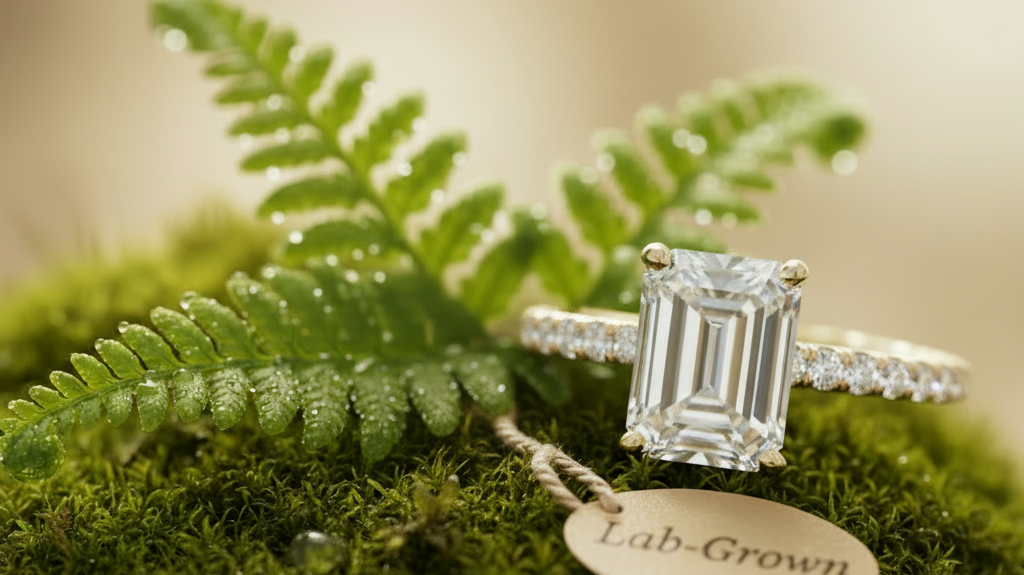
How can I verify a lab-grown diamond's certification myself?
IGI offers a free online report lookup tool where you can enter a certificate's report number to confirm it matches a real, issued report.
Where Yoona Stands on This
We'd rather you apply this exact scrutiny to us. Every diamond we offer is IGI certified, verifiable independently, and every piece uses recycled or repurposed metals. For the specifics of what we claim and what we're still honest we haven't verified, see Sustainability at Yoona: What We Actually Do.